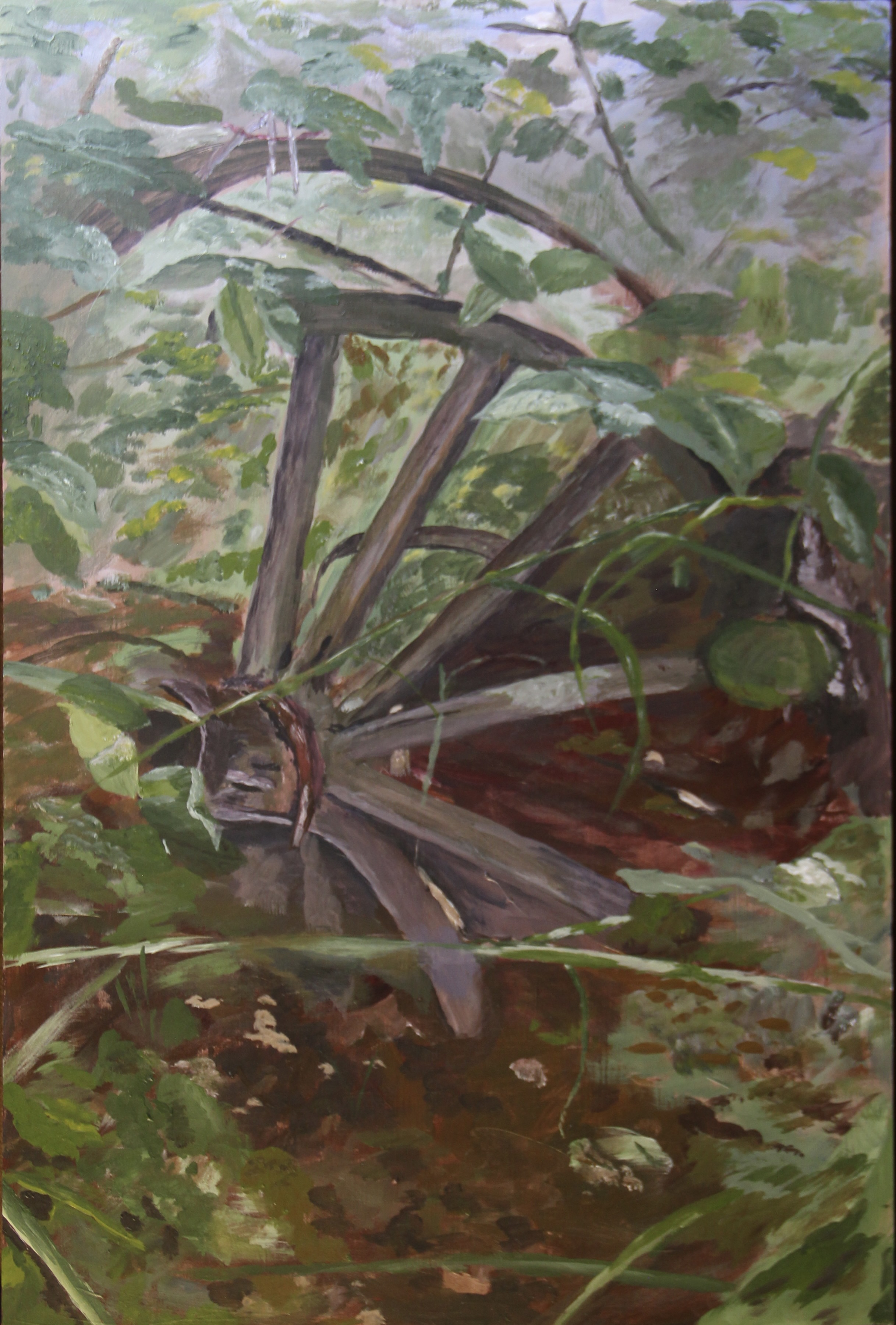
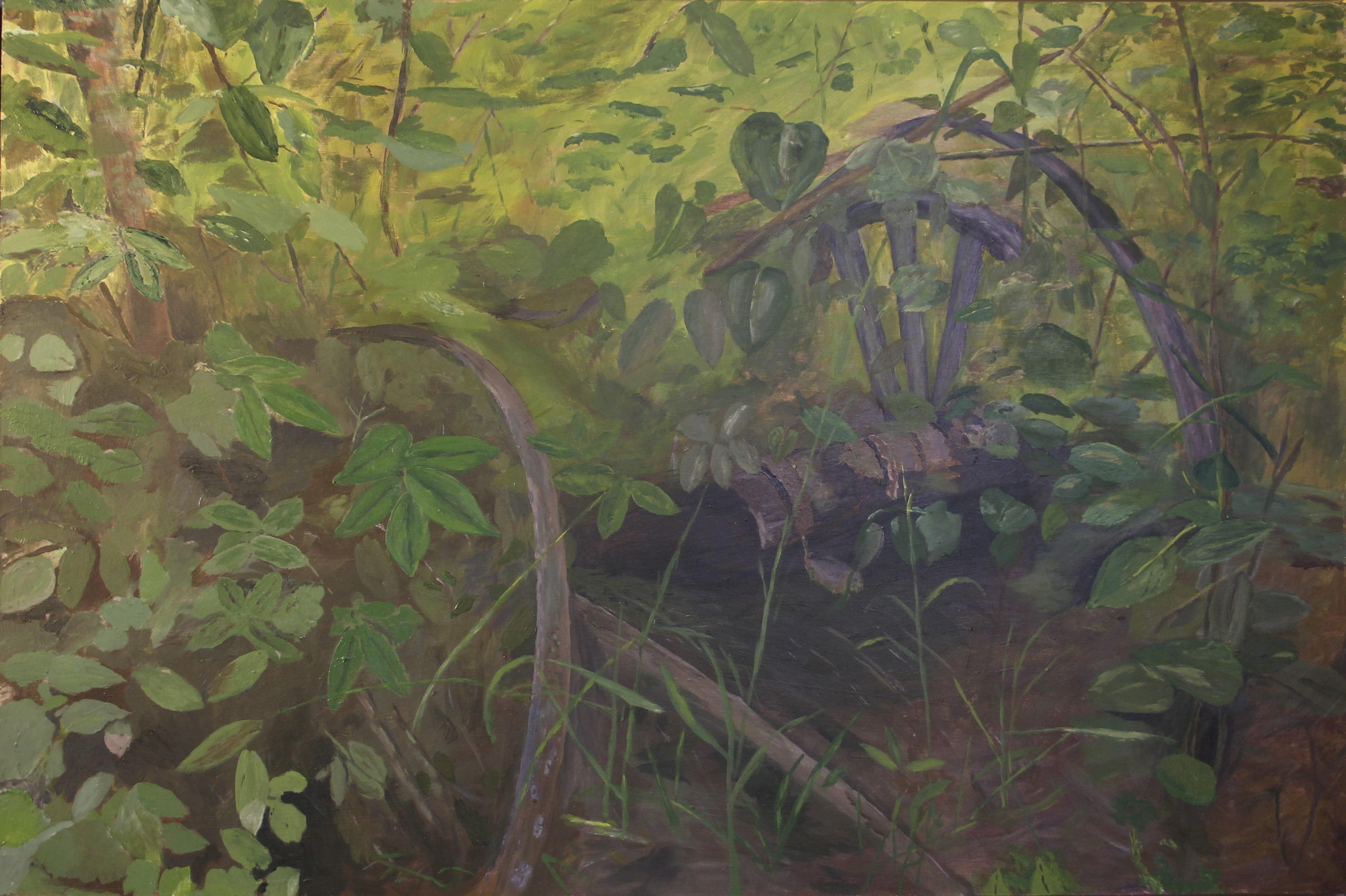
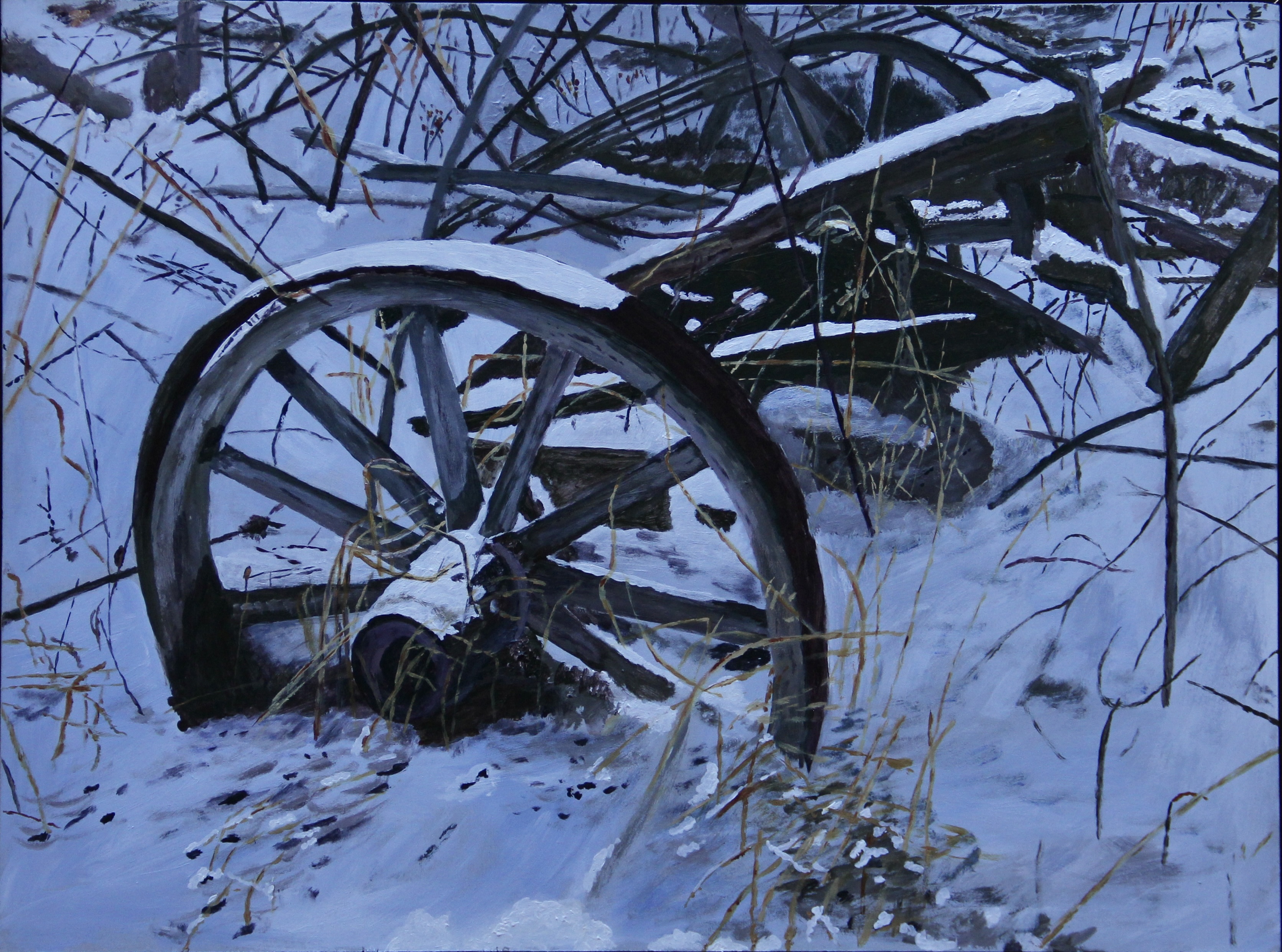
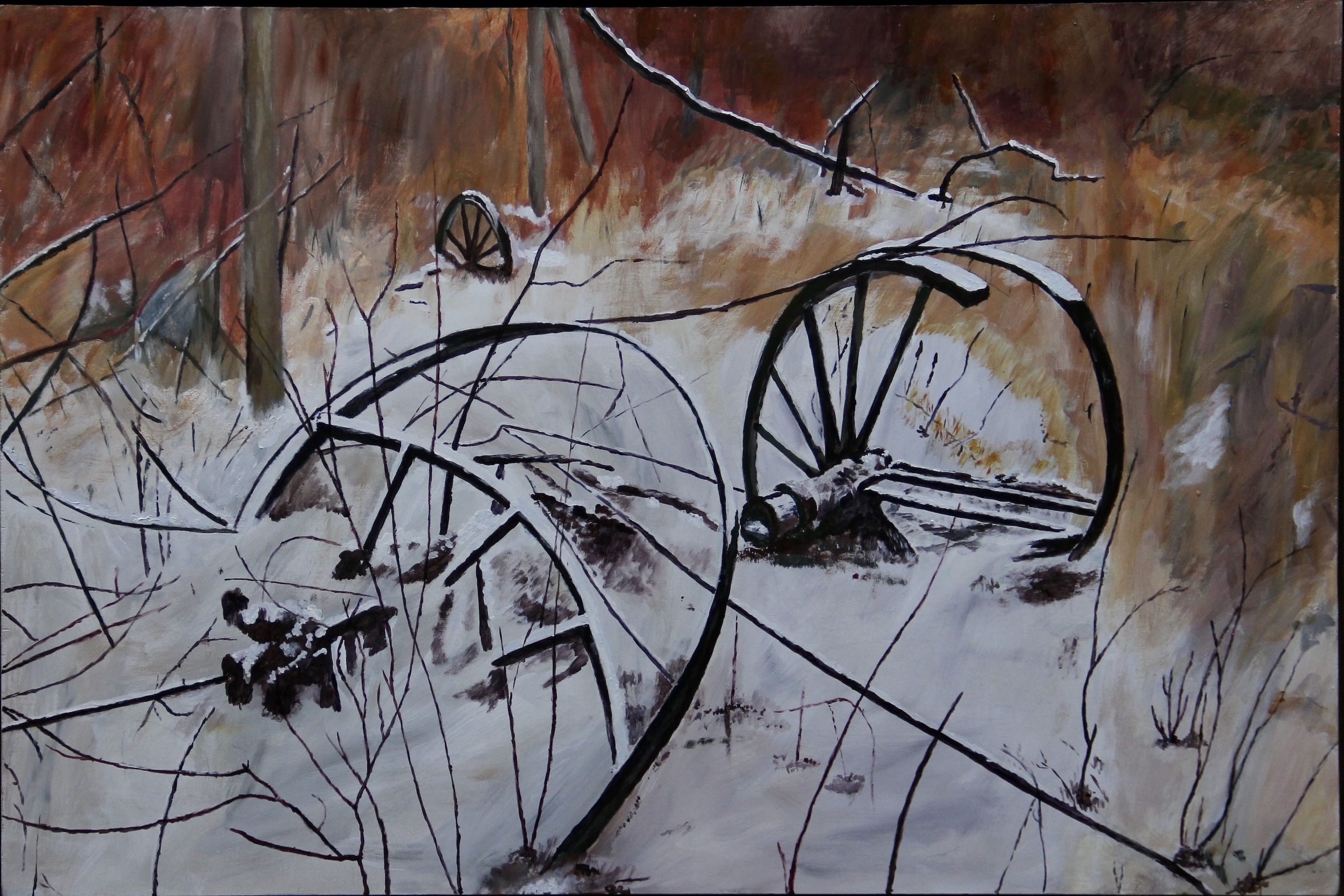
In 1906, Edgar Allen took out a homestead on the North East Quarter of Section 34, Township 49, West of the Third Meridian on Treaty 6 Territory north of a small town called Maidstone on the prairies of Turtle Island. Settlers called the country Canada. Later, in 1919, he sold the land to Ole Johnson, who in turn in 1943 sold it to my Grandfather’s family. It went through several more ownership changes to my uncle, then my father and finally to me.
Two years ago, my youngest brother, Pat, told me of a set of wagon wheels which our father had described, located somewhere in a poplar bluff on the west side of the quarter section. He told me how he had looked repeatedly for them but with no success. I had not heard this story and one time while on the land I did my own search but with no success.
Later that spring quite unexpectedly Pat was making his way through the bush and came across the famous wagon wheels. The wheels were nestled in grassy overgrowth with trees growing next to them. He snapped a photo. Of course that sent me looking again the next time I was there. Lo and behold I was able to find them. By this time the grass was green and the wheels were even more hidden. Several months later I decided to try capturing them with paint and brush, resulting in these two paintings.
18″x24″ Acrylic on panel
24″x36″ Acrylic on panel
Not long after painting these and after an early shot of snow, I was back on the land and discovered the wheels in yet another setting. This in turn prompted two more paintings.
18″x24″ Acrylic on panel
24″x36″ Acrylic on panel
Mr Allan’s wagon is slowly returning to its origins. Much of the wooden components have rotted away. The steel rims are rusted and of course will remain for future generations to discover .
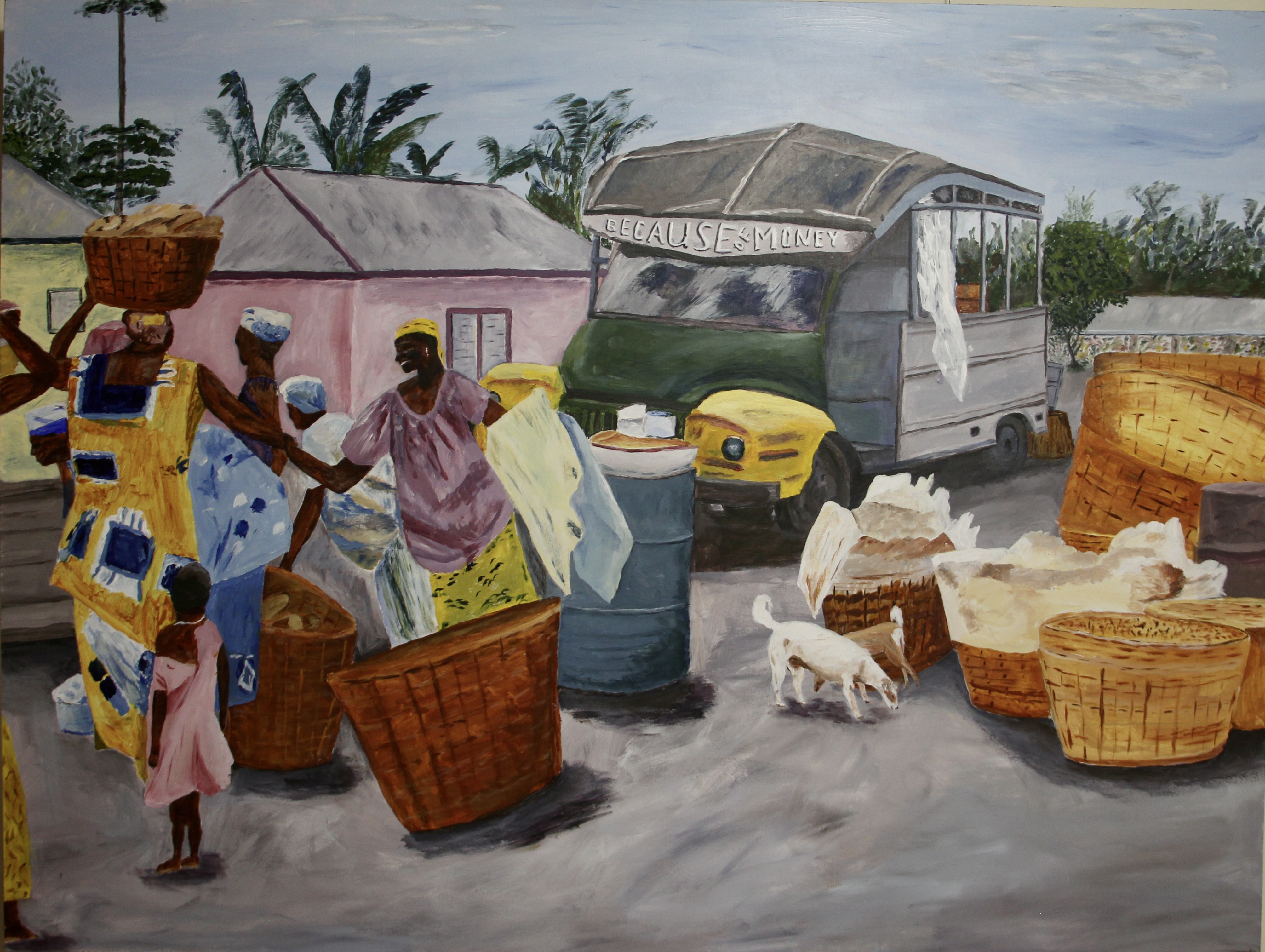
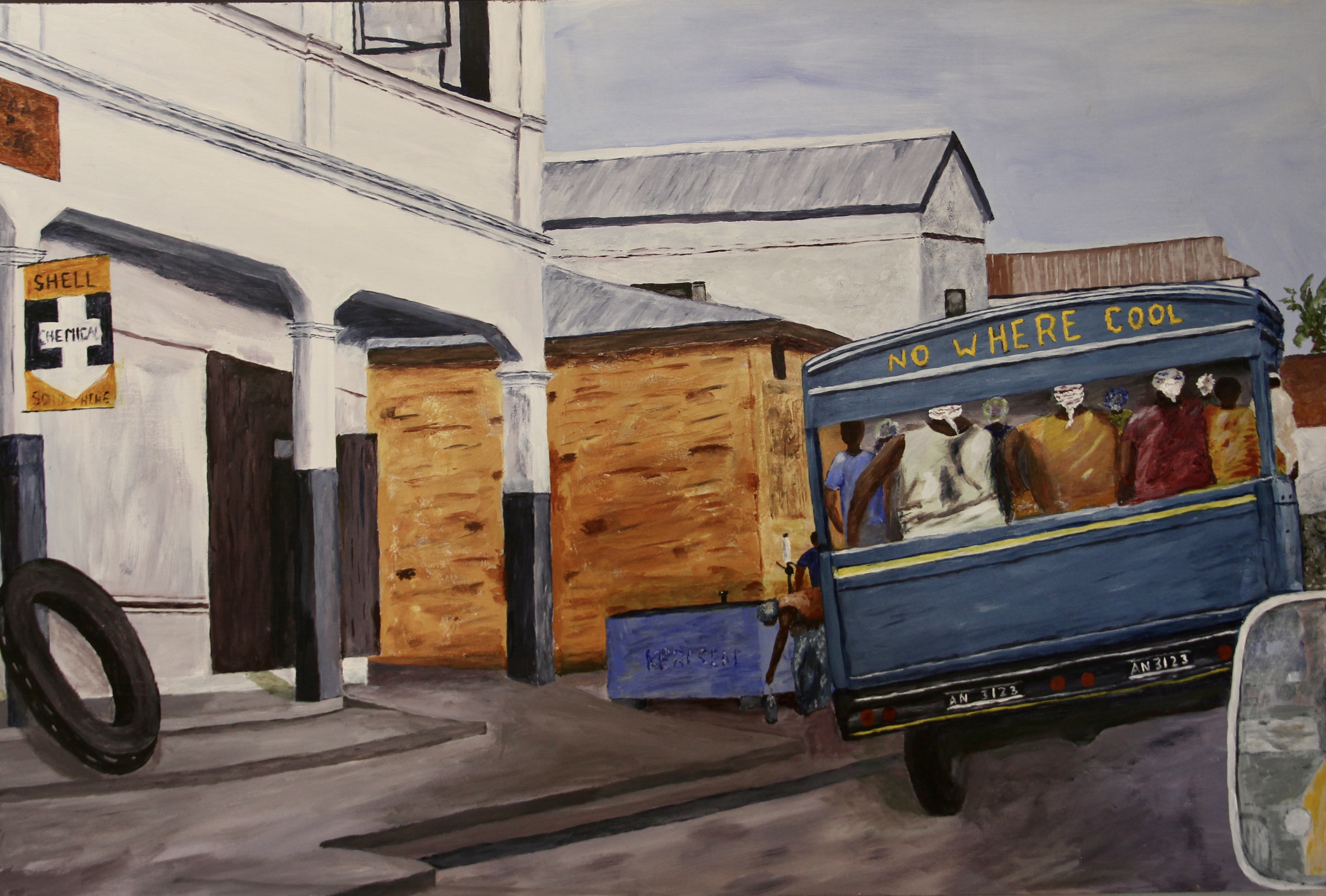
It did not take long in Ghana to gain a deep appreciation for the innovative spirit which is so common in the country, and for that matter throughout West Africa. The most common means of transportation when I first arrived in Ghana in 1971 were lorries with colourful slogans, designed to carry human or other cargo or a combination. The truck chassis on which they sat was built by the Bedford company in England, often assembled in Ghana. Local tradesmen built the boxes, constructed in such a way that wooden planks could be installed as seating for human cargo. These could easily be removed for other types of cargo, most often produce going to or from local markets including live chickens and occasionally goats.
The stiff leaf springs of the truck chassis did not lend themselves to comfortable riding, especially on the rough dirt roads which were the norm in those days. Hence the name “bone shakers” came into being. The lorries were mostly used by women going to and from market with their produce – the common phrase “mammy lorry” was used out of respect for the important role in the country’s economy played by these women.
36″x48″ Acrylic on panel
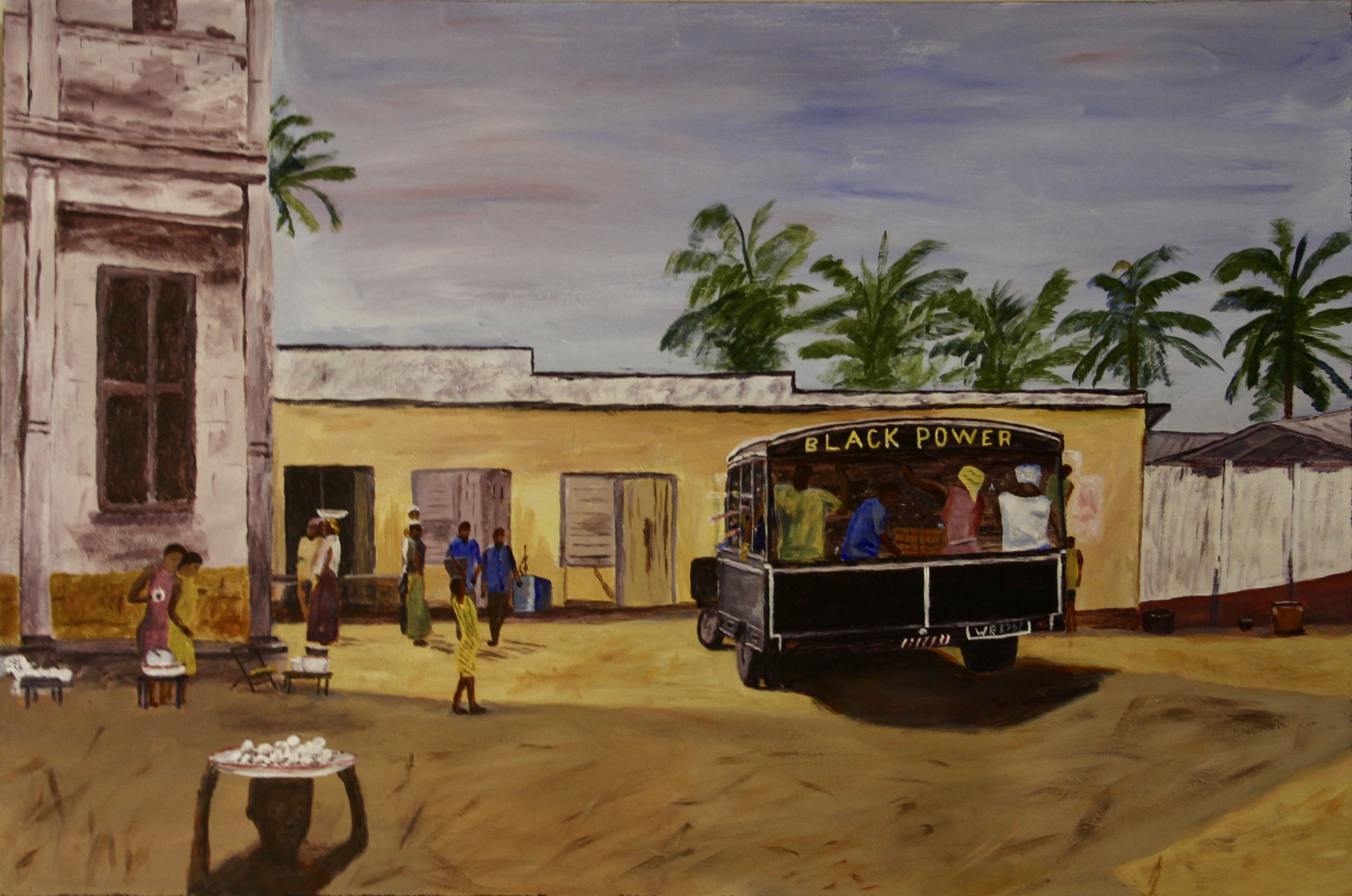
This year I decided to paint a series of Mammie lorries as my way of paying tribute to a critical means of transport in the past as well as to the market women and the lorry drivers and their mates.
24″x36″ Acrylic on panel
This lorry, “Black Power” was based in Half Assini, the village in which I lived. In this scene it is pulling in beside the market, likely on a busy market day.
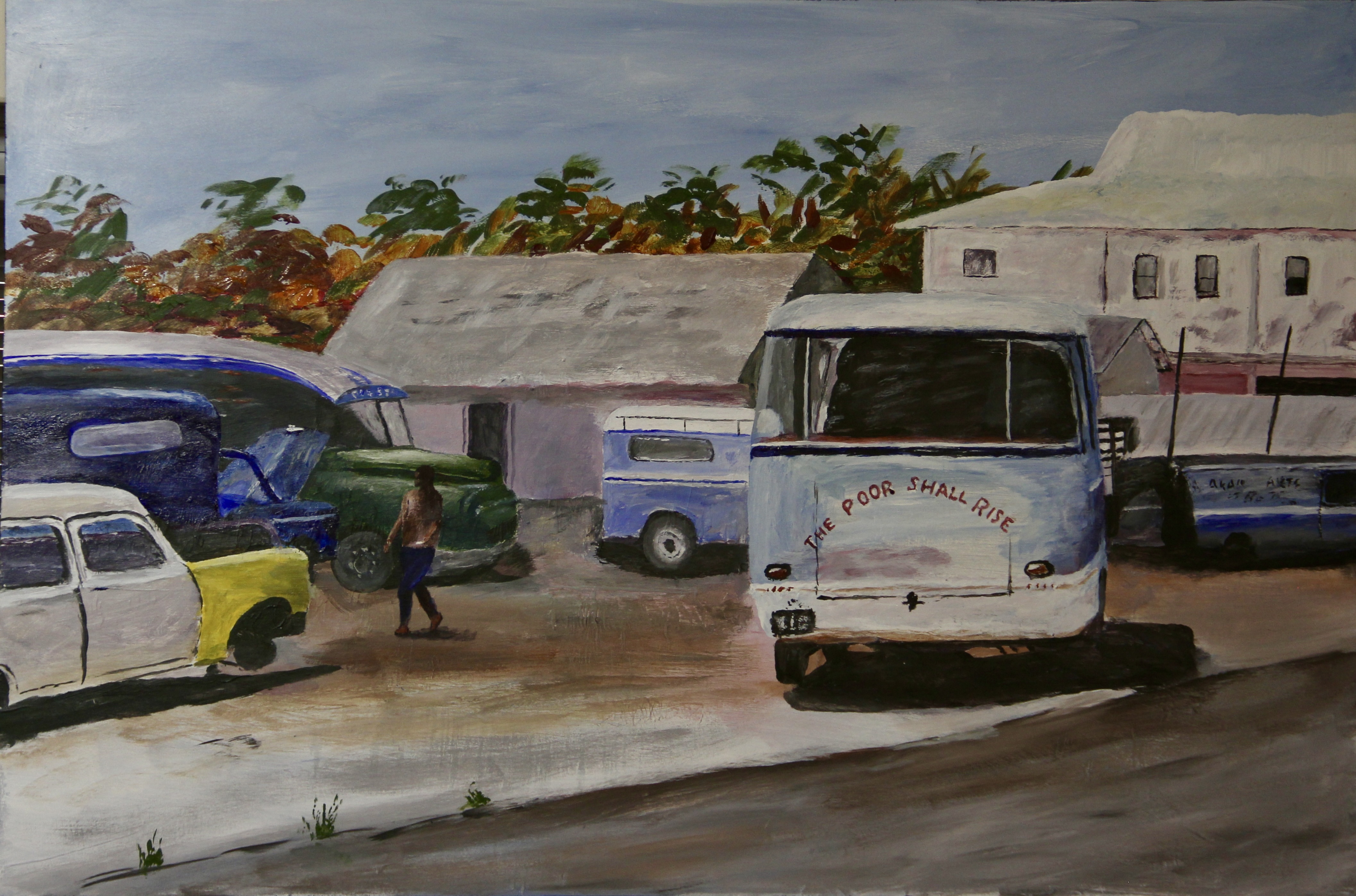
24″x36″ Acrylic on panel
The lorry sitting to the left in the fitter’s (mechanic’s) shop in Half Assini was repaired and waiting for the driver to take it away. The bus with the slogan “The Poor Shall Rise” was not so fortunate. It was one of the new buses which were slowly being introduced to the country to provide a more comfortable ride for passengers. This particular one was owned by a co-operative formed by teachers who lost their teaching jobs after the coup which overthrew the Kwame Nkrumah government. Unfortunately for them, the economy of the country fell into a slump under subsequent governments and due to lack of foreign currency, spare parts were not available. This bus sat for the two years I was teaching in the town.
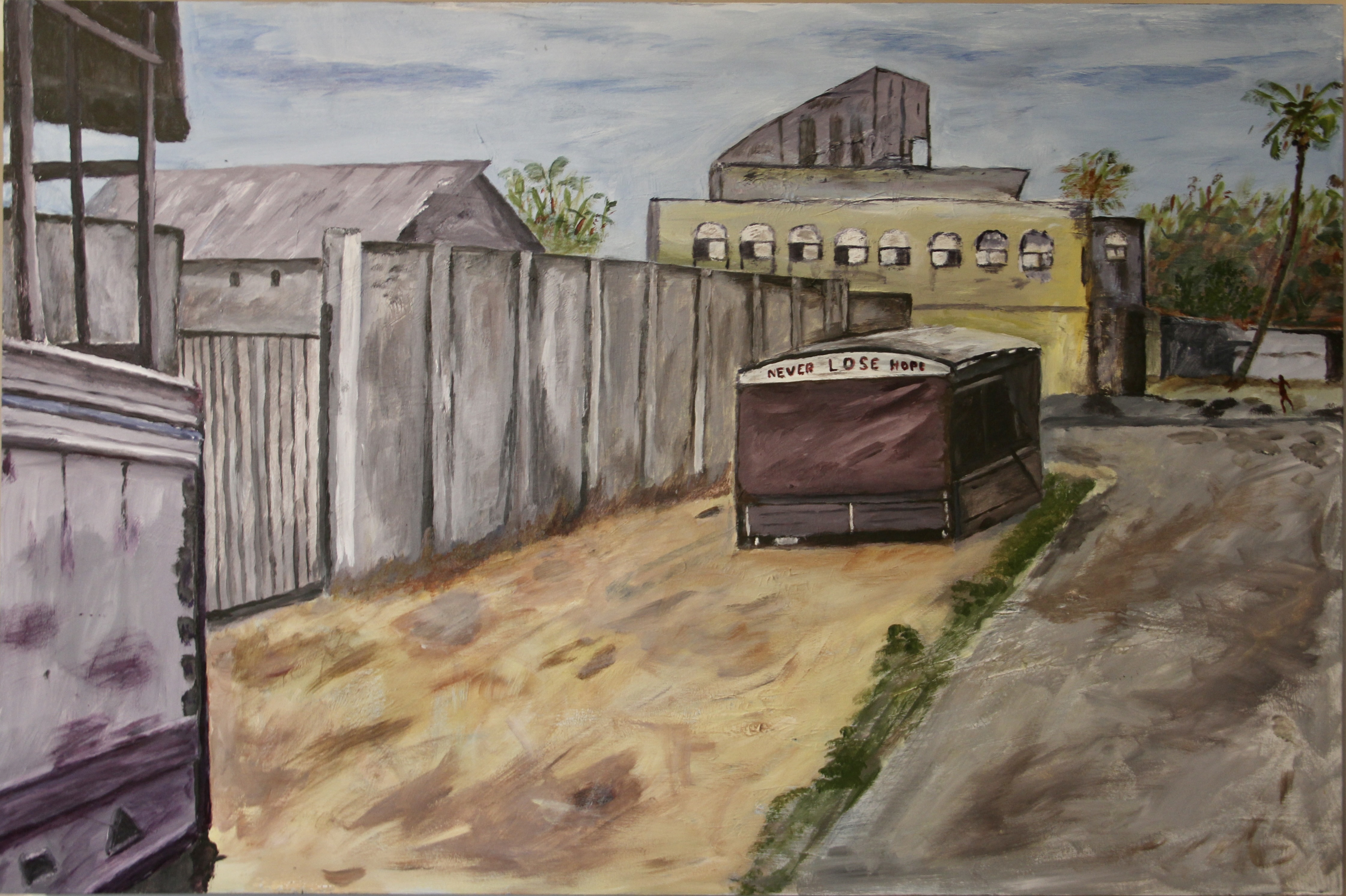
24″x36″ Acrylic on panel
This lorry box “Never Lose Hope” sat outside the back wall of the Half Assini market, waiting forlornly in the hope a new truck chases could be found.
24″x36″ Acrylic on panel
I snapped a quick shot of this lorry one day when I was passing through the coastal town of Elmina in the Central Region of Ghana. I always enjoyed reading the slogans on passing lorries. They were often humorous and reflected the personality of their drivers and the philosophy of society at the time The practise of adding slogans to buses and taxies continues in Ghana. Unfortunately, in my personal view, these slogan nowadays more often reflect the heavy influence of the evangelical Christianity which now pervades much of Ghanian society.
This blog was started when I lived in Ghana, West Africa. It provided me a means of communicating with others in the country as well as those in other parts of the world who might be interested in Ghana. When I moved back to Turtle Island, the blog was used to keep friends and family updated on my latest endeavours. Now with this revival as a means of putting my paintings out in the world, I just may return to posting blogs again. Below is a list of the categories which were set up. Check it out to see which might interest you.
In Ghana, a road winds south from Kumasi to the rim that surrounds a crater and sacred Lake Bosumtwi. Thirty villages nestle around the lake.
12″ X 36″ Acrylic on MDF
In the distant past, the lake level was much lower than it is now, with very large trees growing down the hillsides. Water levels have risen, flooding these trees, and leaving what remains of them standing in the water.
18″ X 24″ Acrylic on MDF
Fishing methods are restricted. Most commonly a net is thrown while sitting on a padua (a wooden plank).
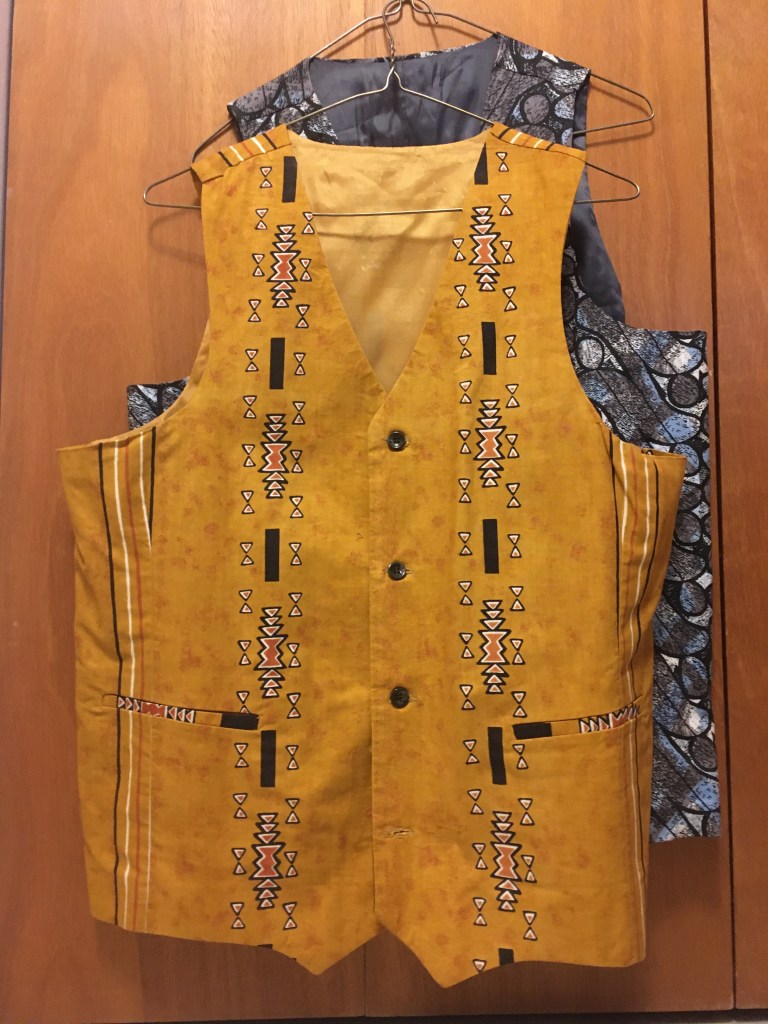
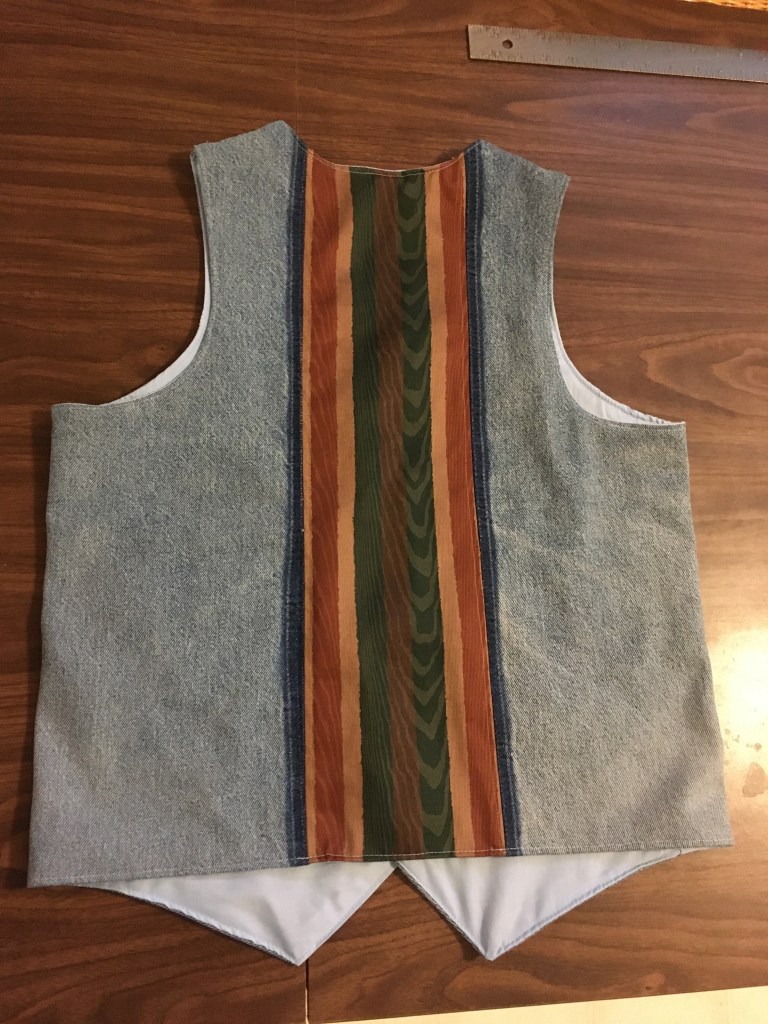
With my sewing experience and knowledge recently gained, it was time to have a second go at making a vest from salvaged blue jean material. Clearly a new pattern was required. Two vests made for me by my friend and professional tailor in Ghana last year hung in my closet – they provided the solution. All that was required now was for me to remember to leave “seam allowances” when cutting the cloth.
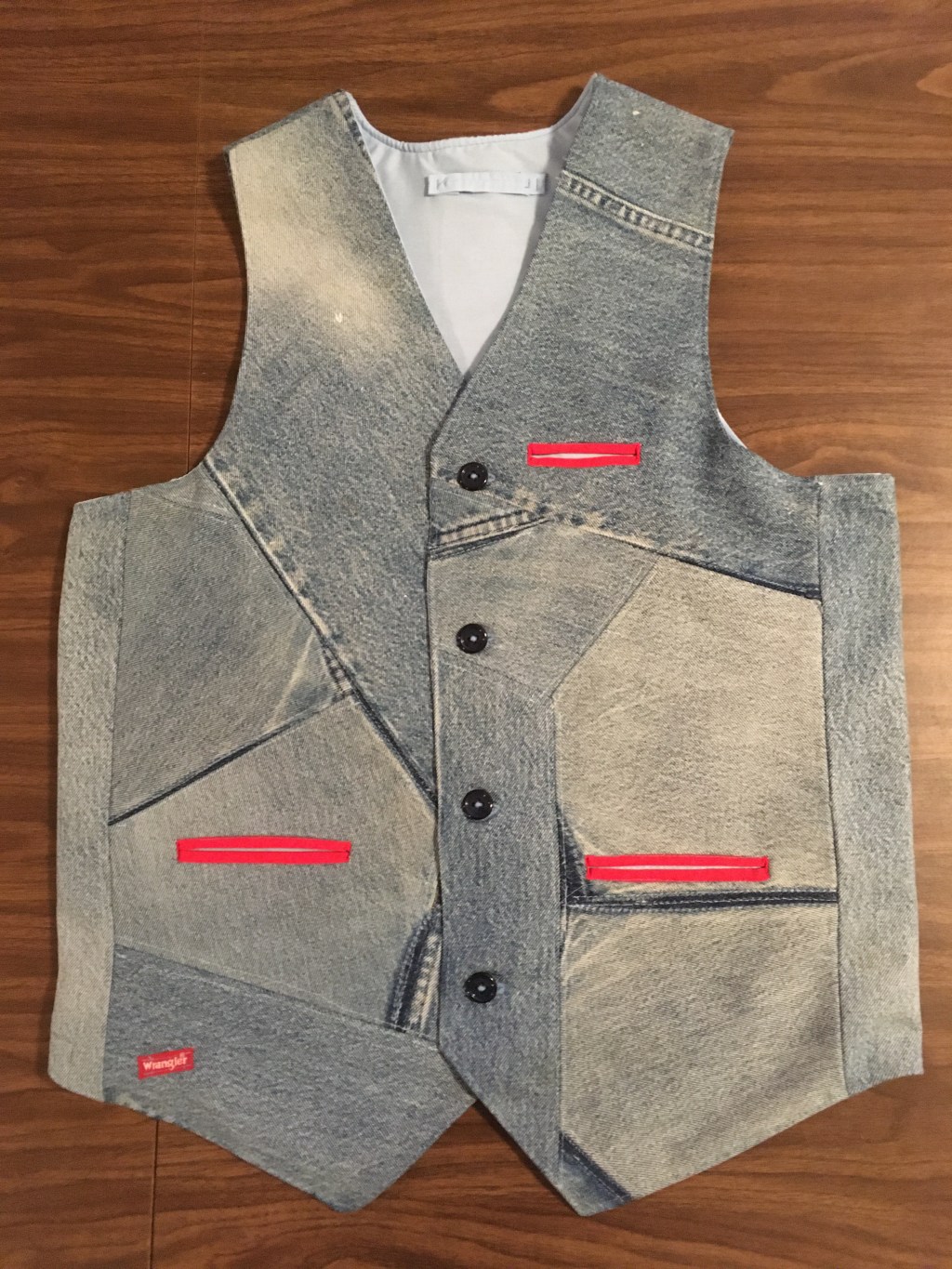
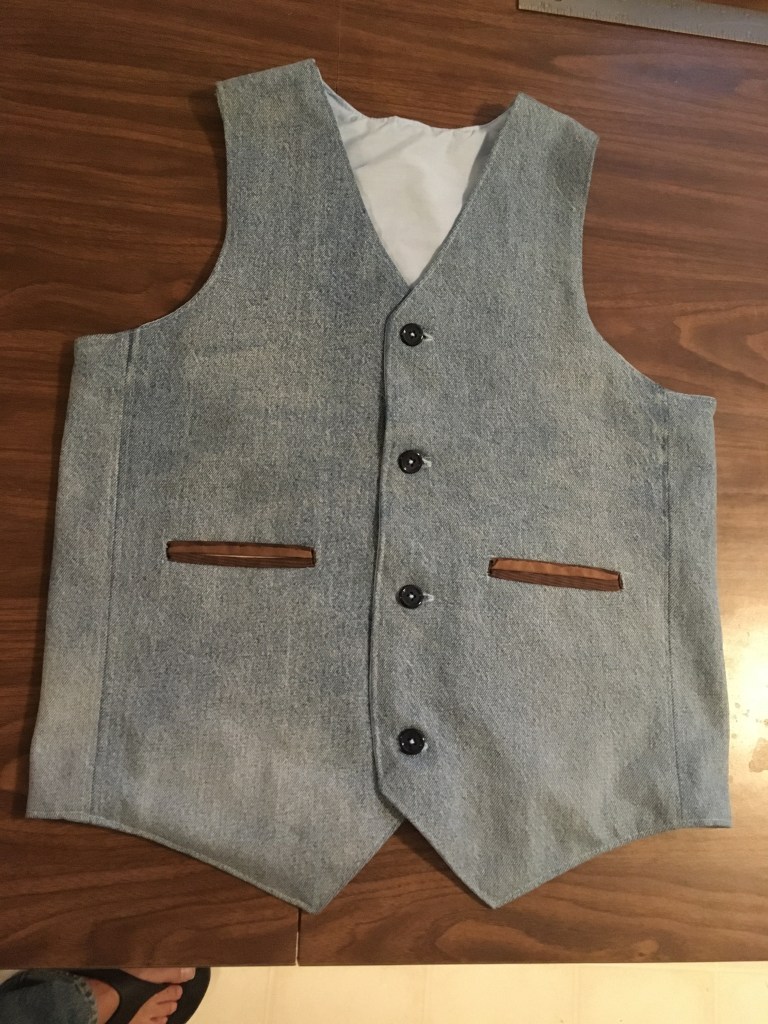
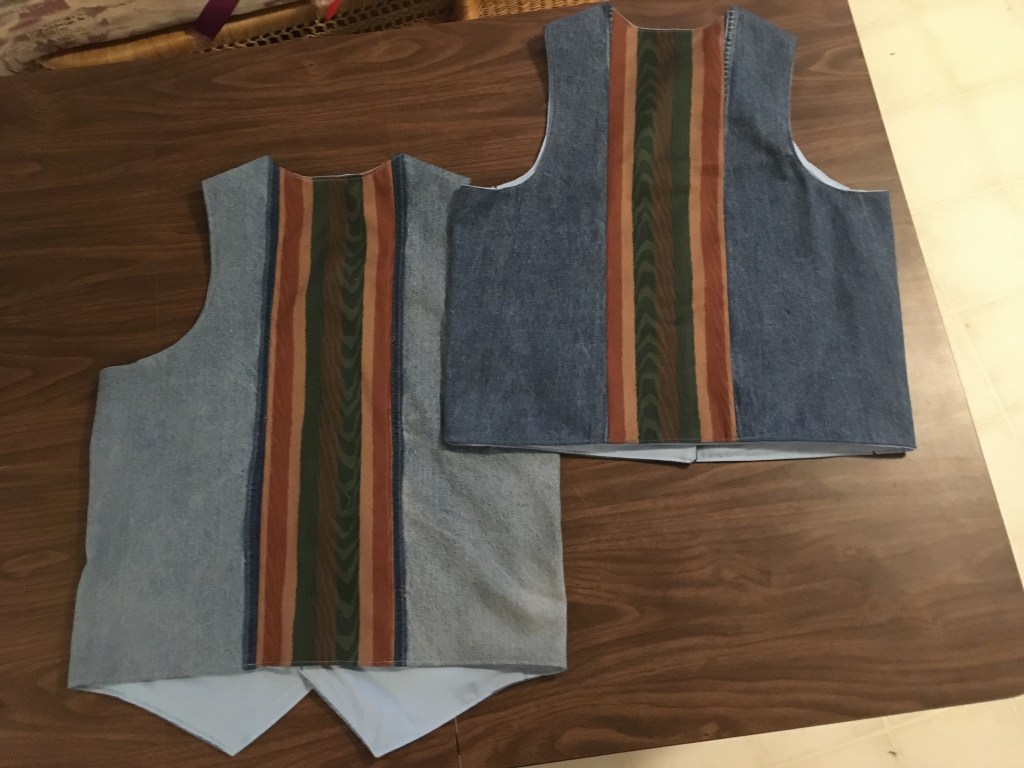
With a lot more confidence, the new pattern was drawn up on brown paper and more jeans ripped apart. The jean panels were not quite wide enough for the back of the vest. I scrounged through a tote of materials my partner had on hand and found a drapery remnant that she had bought many years ago for $1. I even spent $4 for new material for the lining. After some cutting and sewing, here is the result:
That went so well, a second vest was in order – his and hers.
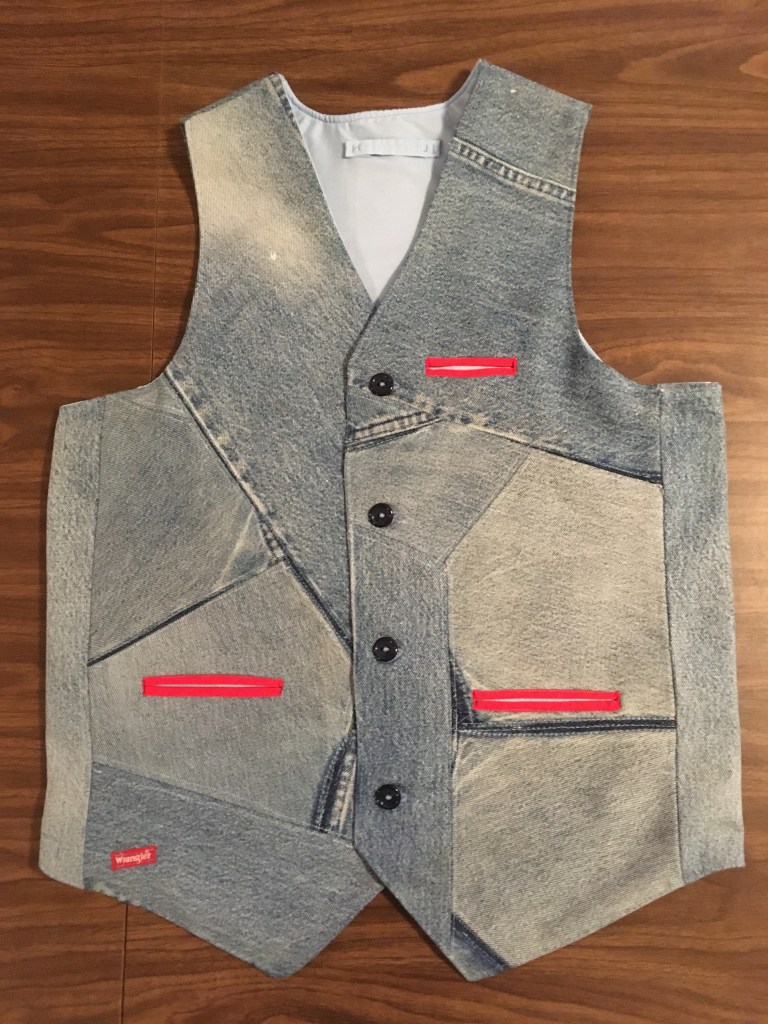
Since the pattern worked, I went for one more vest, this time with some changes.
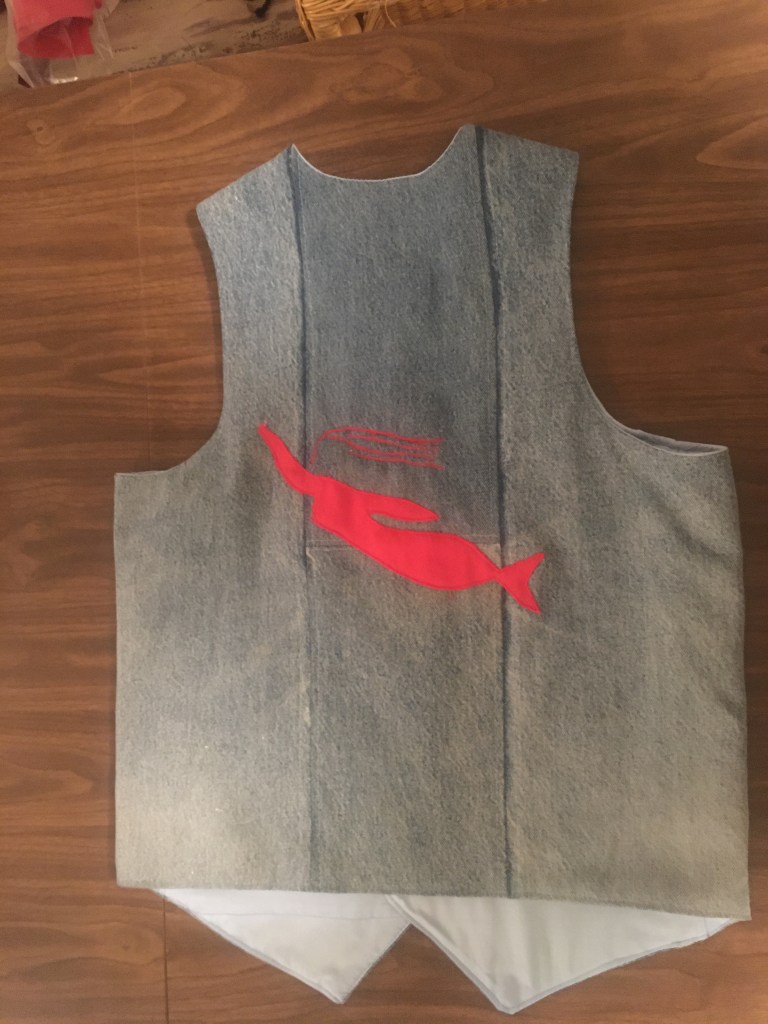
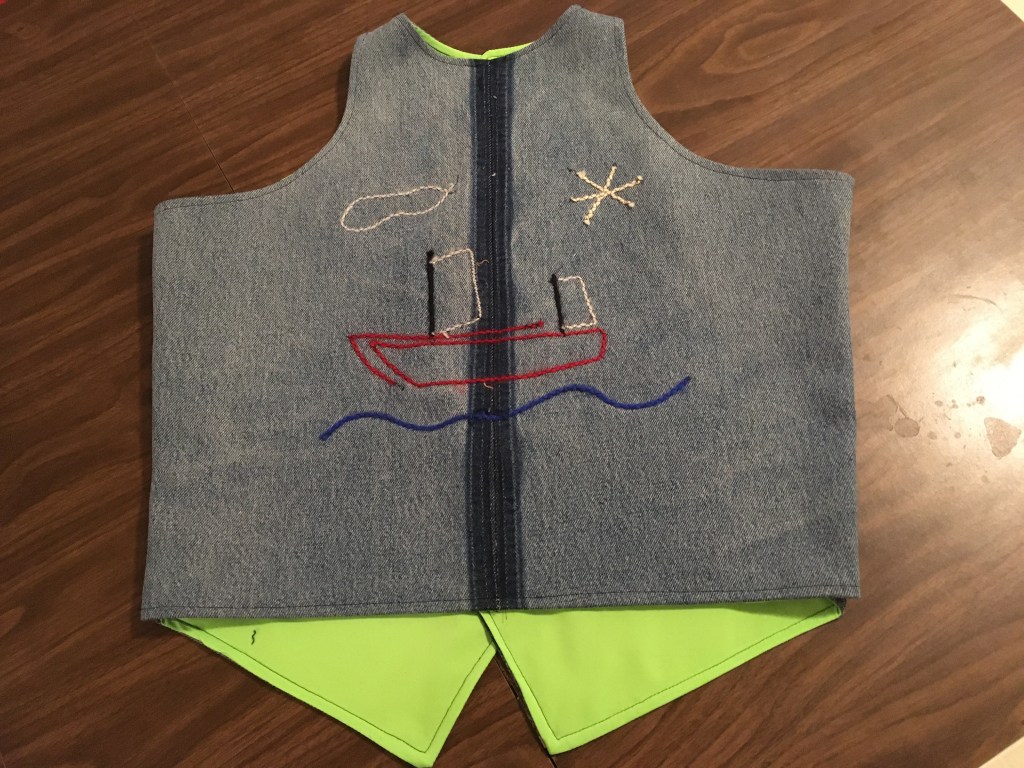
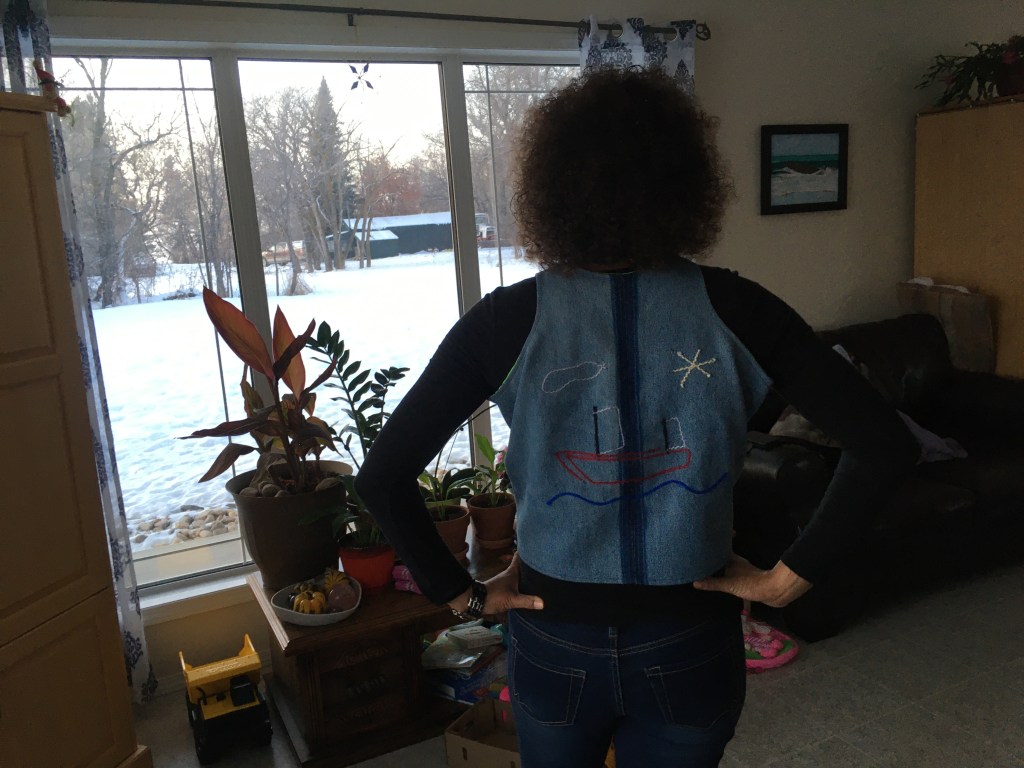
The pile of worn out jeans, the essential ingredient, was getting smaller, requiring “consolidation” – for the front of the vest I was forced to sew pieces together. A third pocket was added to dress it up a bit. And the back panel now features the motif from my sailboat, the Prairie Mermaid, thanks to some fancy embroidery and applique´ work by my partner.
Enough vests for a while. Time to move on to something new.
So what becomes of a neophyte sail-maker when he has no more sails to sew? Well, I have been known to tinker with bicycles and other things but its the wrong time of year for that. Since I am not in the least interested in being either a soldier or a spy, that really leaves one choice.
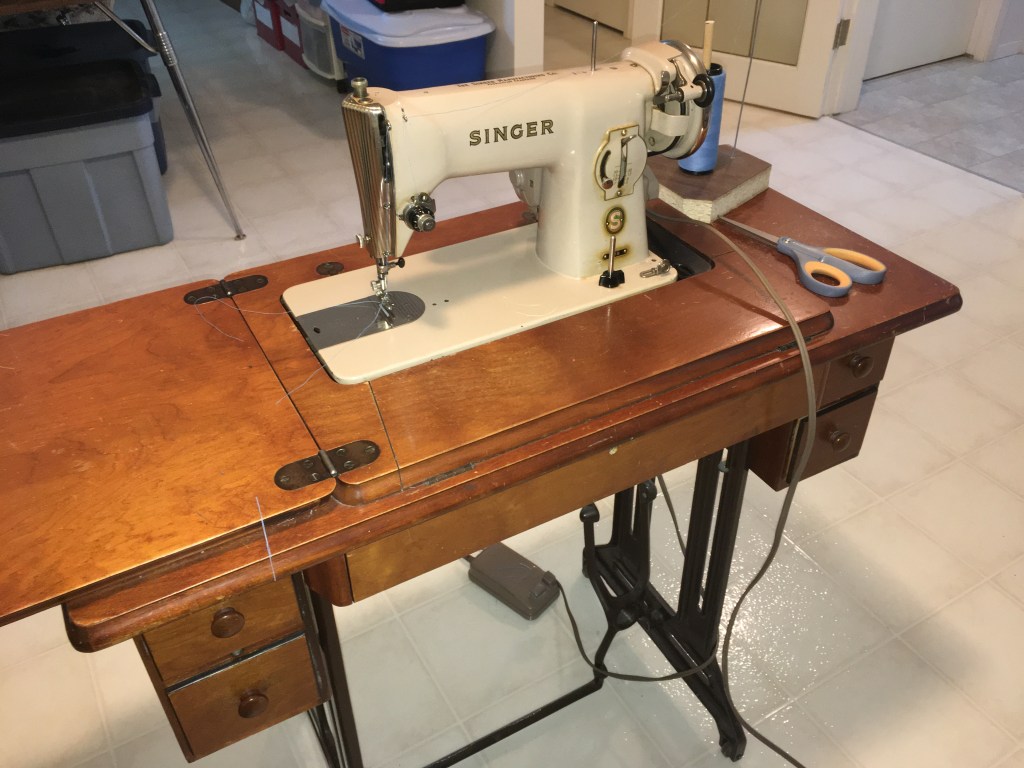
1956 Model 191B Singer
With the experience of sewing sails, a deck tent and some odds and ends for my sailboat, and with my Mom’s lovely Model 191B Singer sewing machine beckoning me, I decided this winter to extend my sewing experience. There was a pile of old blue jeans in my closet with front legs tattered and full of holes but back leg panels still with some very serviceable life in them.
After ripping the first two pairs of jeans apart I searched the internet and found someone offering a way to make a pattern for a vest. Filled with determination I soon became aware of my lack of knowledge in the field of tailoring.
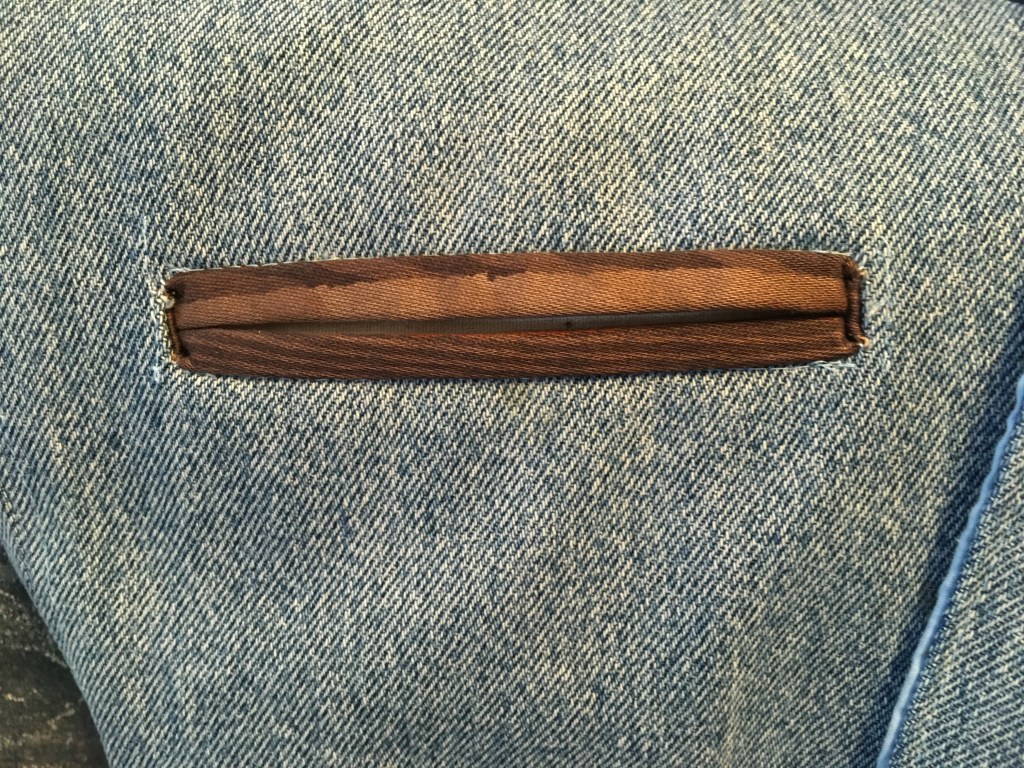
I had no idea that I would not only be learning a new skill but also developing a new vocabulary! As an English literature major I was intrigued to learn the word “welt” not only refers to a swelling resulting from a blow but also is the term for the special pieces sewn around the opening to a pocket. And in learning how to construct the welts on the vest I discovered I would be using the technique known as “sew in the ditch”. In case you’re wondering, this does not refer to planting wheat in a trench.
A welt , sewn in place using the “stitch in the ditch” technique
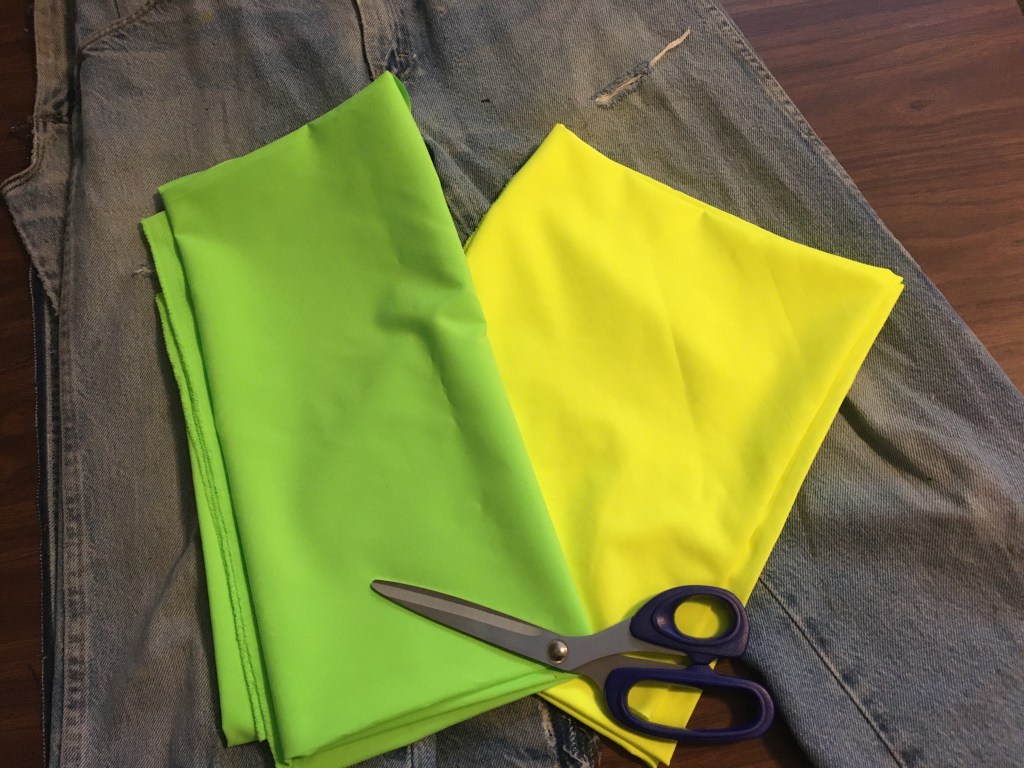
I had decided to add a lining to the vest. On hand was some light cloth purchased two years earlier to make a pennant for the Prairie Mermaid. There were two colours from which to choose. Neither were perhaps a colour I would have selected for this purpose but since I had it on hand, I chose the lime green and proceeded.
At this point I still had not understood the geometry and sequence of adding a lining to a piece of clothing in such a way as to end up with no exposed seams. You sew the outer front panels to the outer back panels, do the same for the lining, and then lay the outer layer and the lining face to face, sew them you together and then turn them inside out, right?
Wrong! Its not nearly so simple. That definitely does not work – take my word for it. Soon I was back on the internet to learn how to assemble a lined vest. After several fudged attempts during which my ripping skills were given more practise, I finally had a completed vest. (By the way, “ripping” as it applies to a tailoring skill has become as much a part of my sewing experience as the sewing itself!)
There was an unique element on the back. I discovered a feature of the zig zag attachment for the Singer making it possible to add cord or yarn to cloth. Presto – a picture of my Mana catamaran appeared.
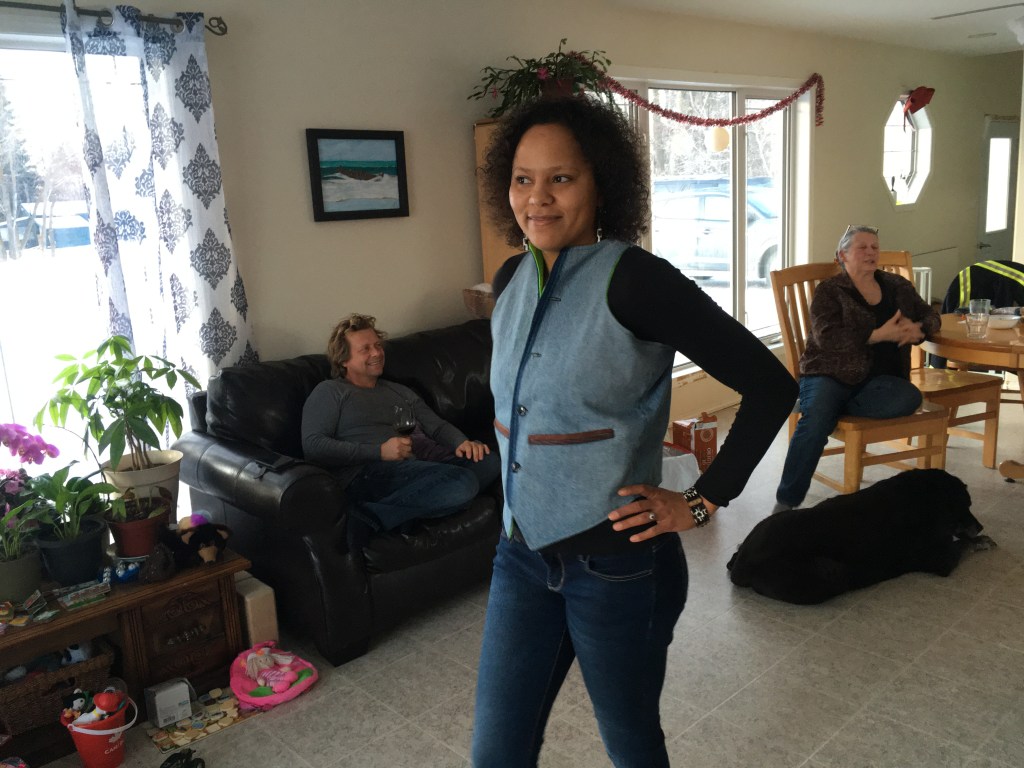
Time for the ultimate test – how did it look on me? Well, I was able to get it on, just barely, but I could hear seams being stretched to their limit. The vest was much too small for me. What had gone wrong? Had I measured incorrectly? No, that was not it.
I queried my partner for her insight. She asked a simple question, “How much seam allowance did you leave?” Seam allowance? There had been no mention of seam allowance in the instructions for the pattern. I had never even heard the expression, much less take it into account. It was another of those terms to become part of my new vocabulary – seam allowance, a most critical part of tailoring.
Well, no worries. There were more jeans from which to make a new vest. All I needed to do was to find someone for whom this vest would be a good fit. A visit to my daughter’s shortly after provided the solution. While I told her of my tailoring venture, she tried it on and immediately fell in love with it. And as it sometimes occurs, serendipity was in the room. It happened to be her birthday – the vest suddenly became her birthday present!
It was back to the drawing board for the tailor. Stay tuned for Part 2 of “Vested Interests”.
After the success with my first try at sewing up an asymmetrical spinnaker for the Prairie Mermaid, I thought it would be fun to give sail-making another go. The cat ketch rig on the Mana presents a possibility that intrigued me the first time I saw photos of a similar rig sporting a mizzen staysail. Once again I went to the good folks at SailRite for their assistance. Sailmaker Jeff Frank came back with a mizzen staysail custom designed for the Mana 24.
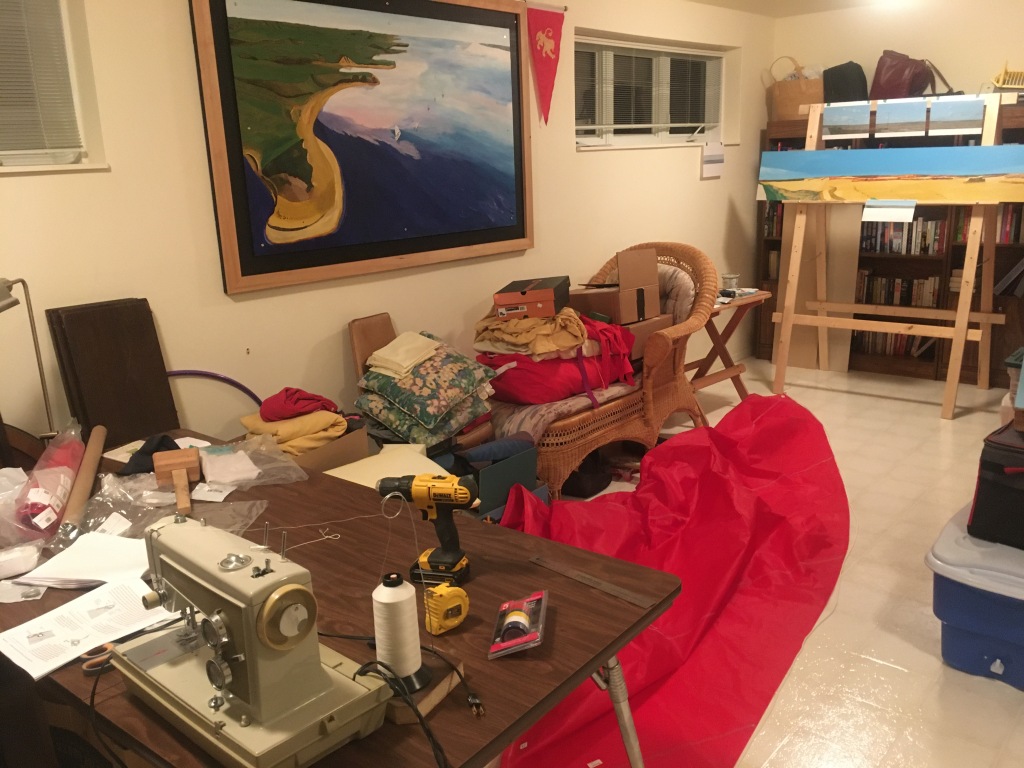
After fall had turned into winter, I again took over a large part of the basement and set to sewing up the kit.
SailRite provides excellent instructions with their sail kits. In addition, they are a phone call away to answer questions and I took advantage of the service to get some clarification from Jeff on one issue that arose.
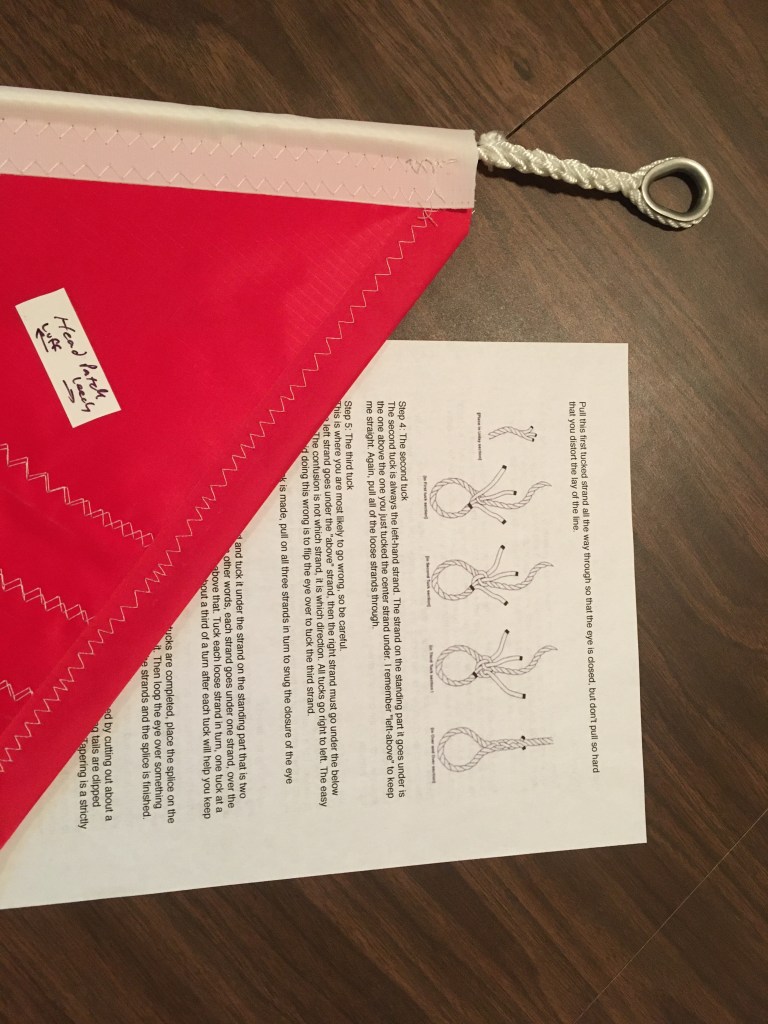
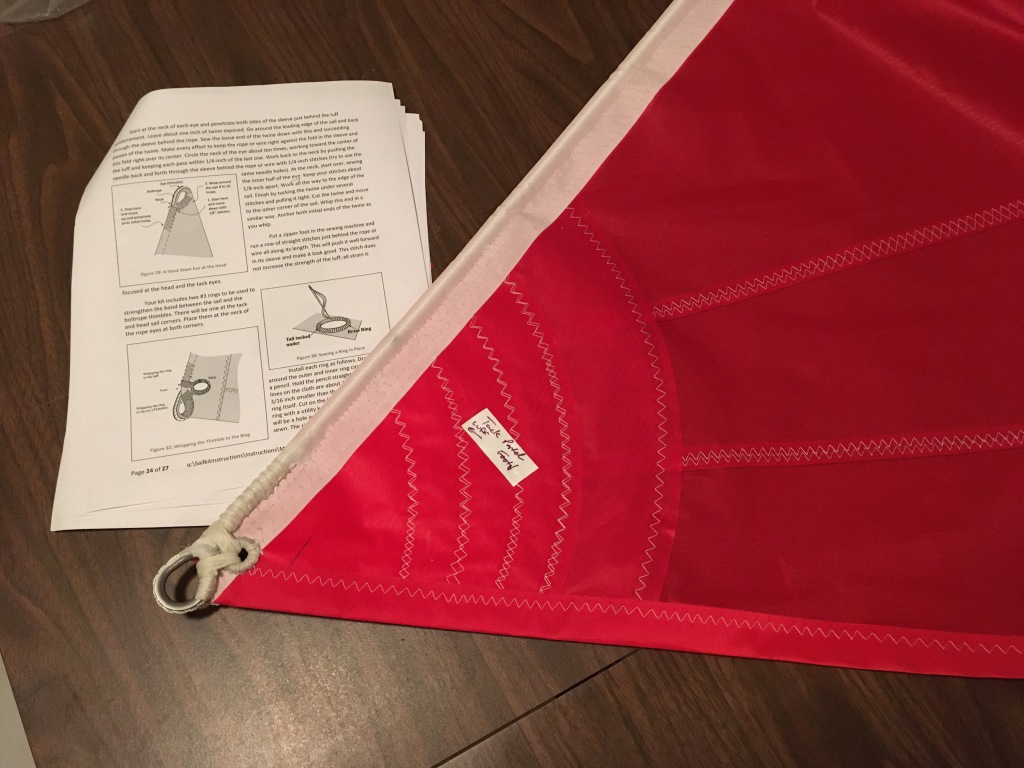
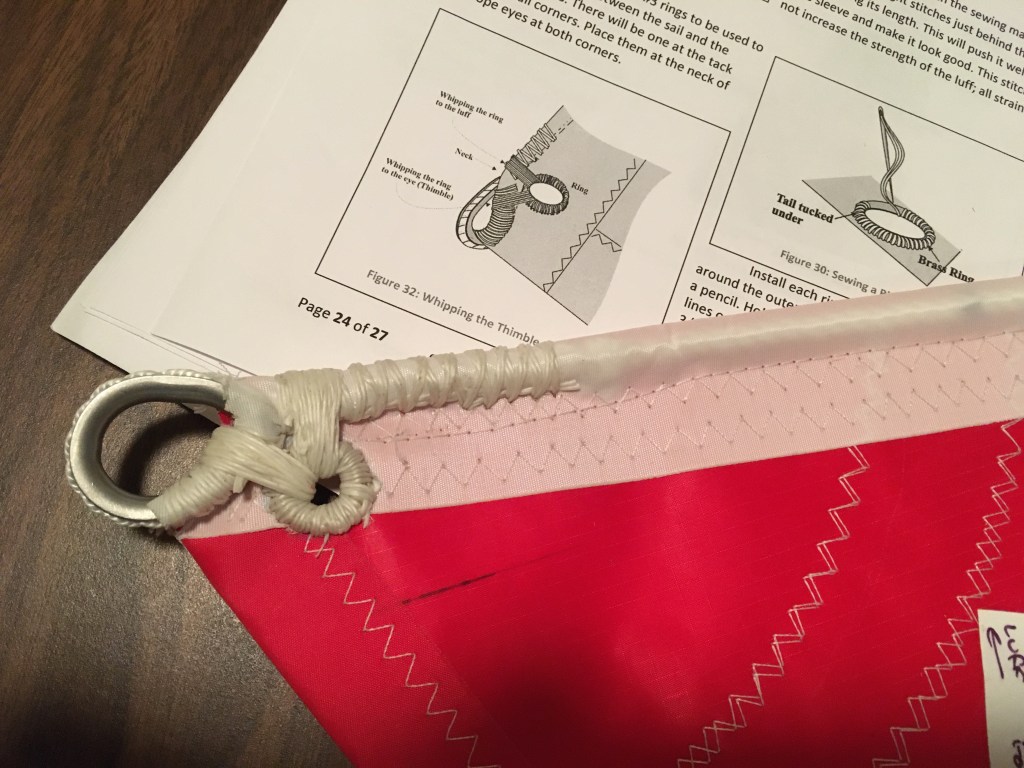
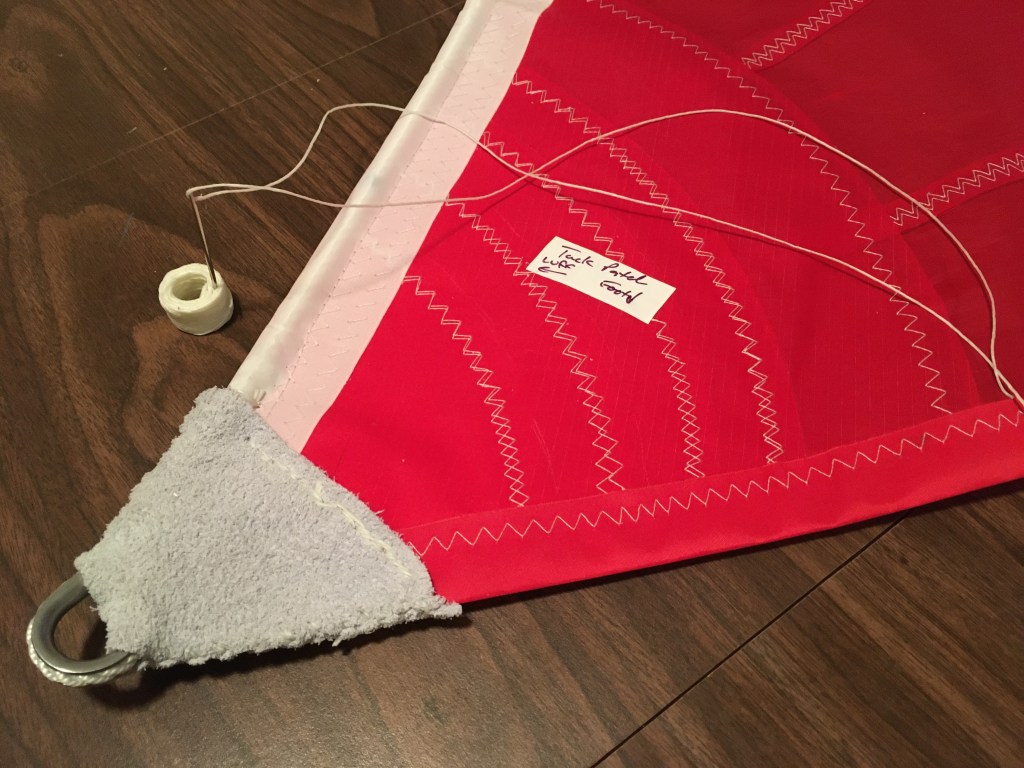
Sewing up the panels is quite straight forward. A double zig zag stitch is used and soon the sail has been produced. The detailing requires hand stitching. Clearly drawn diagrams make it easy for a rookie sail-maker like me to end up with a professional looking product.
Clew with D-ring sewn inThimbles are sliced onto each end of the bolt rope – first time for splicing 3 stranded rope for me – great fun.Tack with boltrope and thimble sewn into placeClose-upLeather protection added to the three corners of the sailThe SailRite logo
The project was soon completed. The sail (and sailor) wait until sailing season for the first trial. Stay tuned.
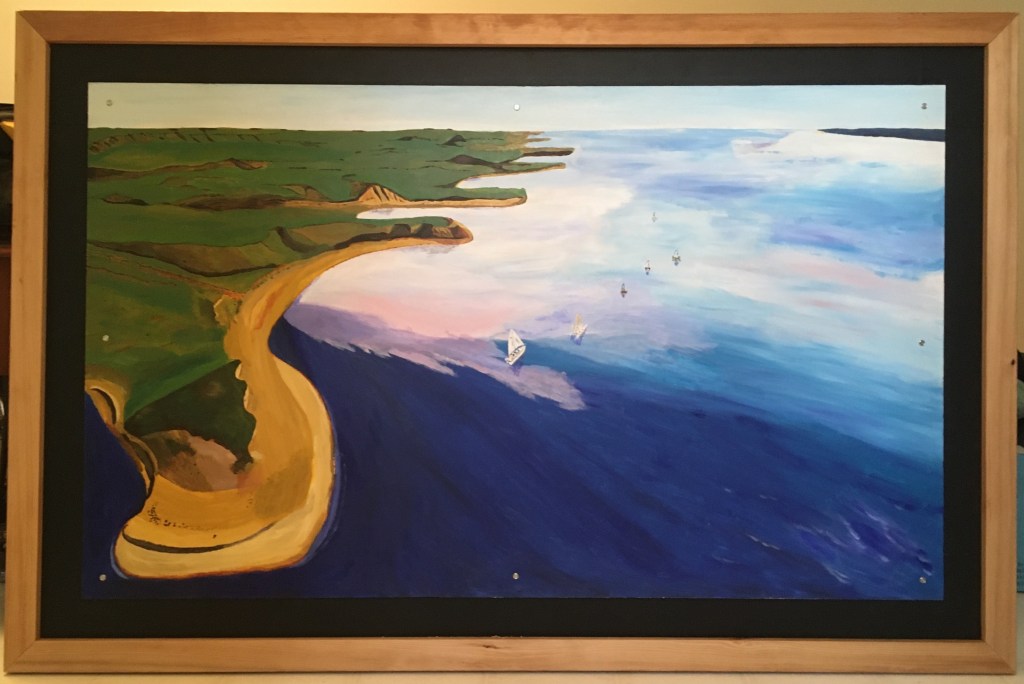
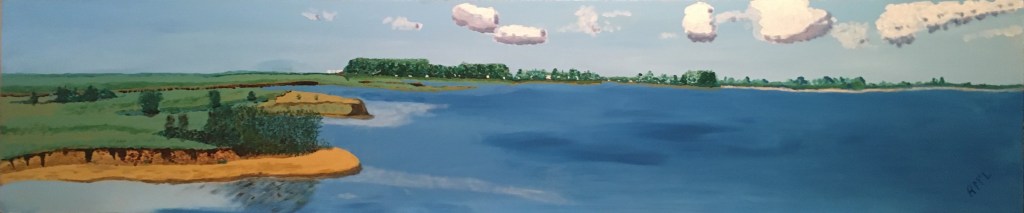
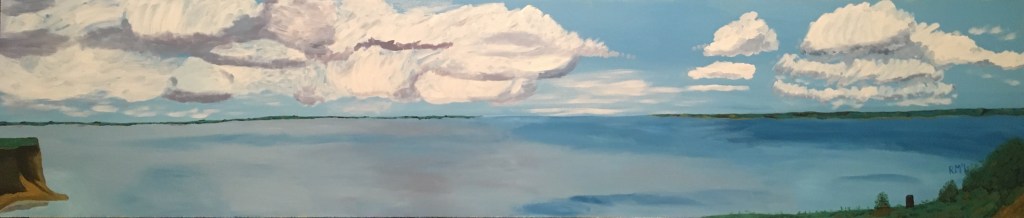
For seven summers, the sailing highlight of the season for me each year has been the week-long Elbow Run on Lake Diefenbaker. The 2019 Run was another great camping/sailing event. We were very fortunate to have on the Run again our very good sailing friend, Dave Fischl along with his son, Chad. They brought with them Dave’s new drone and the results were some very dramatic shots of the lake. From that vantage high above, we see the lake with a new perspective. I used Dave’s shots as inspiration for a series of paintings.
The wide vistas lend themselves to big paintings. This one is 36″X60″, acrylic on MDF board (framed size – 42″X66″).